One in Five
One in five students in US classrooms is neurodivergent. Most of what prepares them for work was designed for the other four.
Neurodivergence covers natural differences in how people think, learn and process the world, including autism, ADHD and dyslexia. In college it rarely shows up as a lack of ability. It shows up as fluorescent lights and crowded group projects, abstract lectures, feedback that lands as criticism, and support offices that feel procedural. Students with ADHD carry GPAs 25% lower than their peers, and neurodivergent students drop out of high school at twice the average rate.
The ambition is there. Three in four neurodivergent students want careers, yet nearly as many feel unprepared for them. Educators want to help but were never trained to, companies want diverse talent but can't find confident, work-ready applicants, and institutions have the policies without the environments. Everyone is waiting on everyone else.
1 in 5
students in US classrooms is neurodivergent
2×
the average dropout rate, 32.2% against about 16%
0%
of neurodivergent students want careers
0%
feel unprepared for them
Problem Statement
Neurodivergent college students want careers, but the classrooms preparing them are overstimulating, rigid and disconnected from work, and the educators teaching them have no playbook. Nudra had to close that gap inside the systems students already use, and stand on its own as a business.
From Chaos to a Clear Opportunity
The brief was wide open: find an unsaturated market and build a venture for it. The first job was choosing where to play.
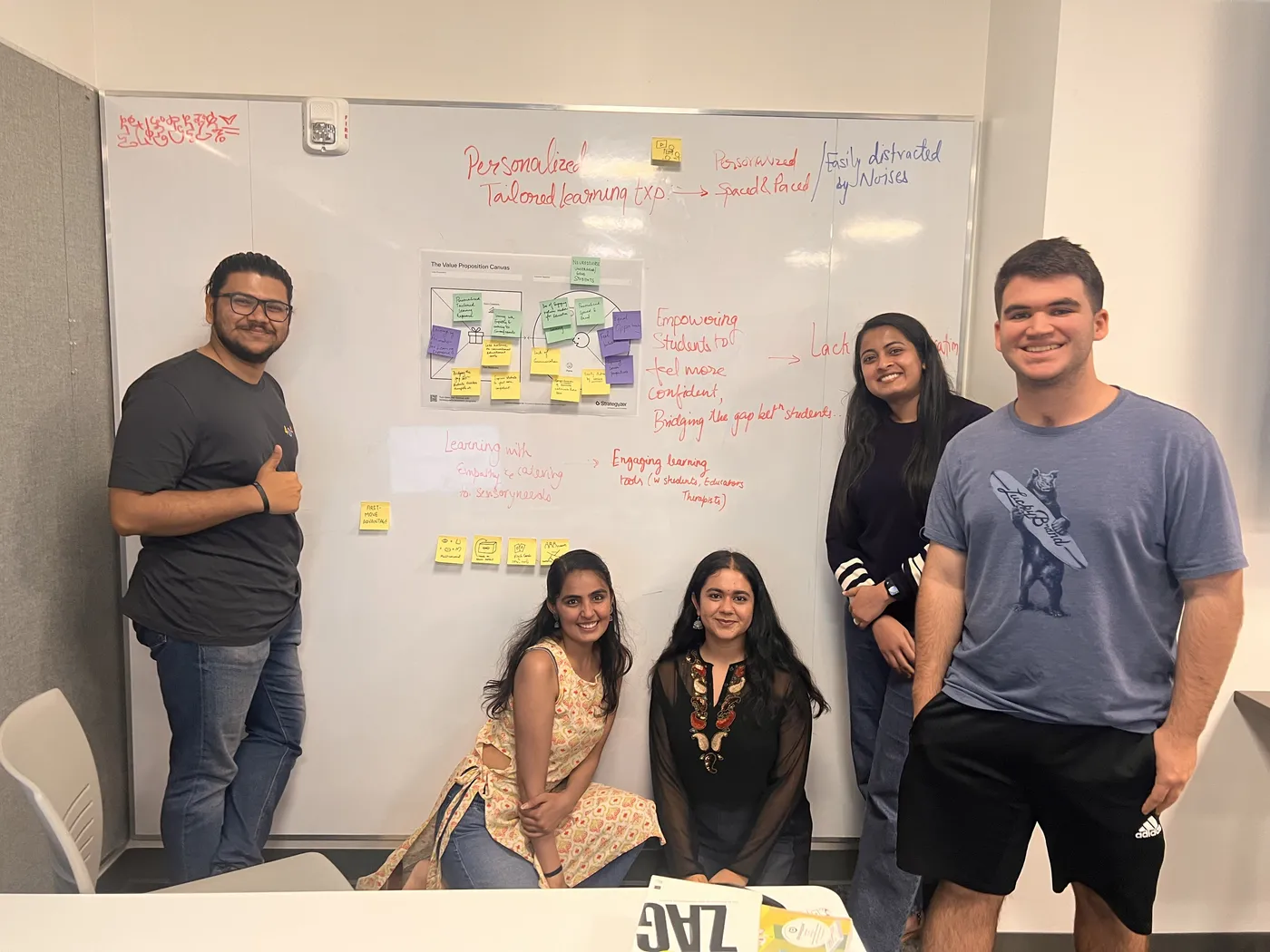
Design Innovation asks each team to find a market gap and build the whole case for it: value proposition, customer segments, partners, a business model, prototypes, financials and an investor pitch. We started where our skills were. A 2x2 of impact against accessibility across ten sectors, from childcare to space, pointed us to animation, the craft four of us shared.
I ran a STEPIC scan of the animation industry, swapping Culture for Creativity and Environment for Economy so the lenses fit an entertainment business. It surfaced three directions worth testing: interactive, gamified content for Gen Z; animation that helps architects and product teams explain complex ideas; and emotionally intelligent learning for neurodivergent students. Each got an opportunity statement, Porter's Five Forces and a SWOT, then we placed them by impact against market saturation. Select one to see why it landed where it did.
Narrowing the Field
Emotionally intelligent learning that supports regulation, communication and real-world readiness.
- For
- Neurodivergent students and their educators
- Rivalry
- Low to mid
High impact and low saturation: few focus on neurodivergent learners, so an early mover can set the standard.
Follow the Gap, Not the Passion
- Decision
- Move from animation as the product to neurodivergent education as the market, keeping what animation taught us (visual, multisensory, emotionally resonant learning) only where users asked for it.
- Trade-off
- We walked away from the industry the team was most excited about, and from our strongest shared skill.
- Why
- Gaming and cross-functional animation were crowded and fighting on price. Learning for neurodivergent students had high impact, low rivalry and room for an early mover to set the standard.
Listening Before Designing
Before designing anything we needed to know exactly who we were designing for, and who we weren't.
We scoped users by generation and geography, neurodivergent undergraduate and graduate students in the US, and dropped gender once it proved irrelevant to the problem. Then we ran tailored surveys for students, educators and parents, and followed them with 21 in-depth interviews. Students were 80% of our reach and educators 17%.
What 102 Survey Responses Said
Parents taught us something too. Access was limited, conversations stayed emotional and general, and only seven completed the survey, so we kept their perspective in view but stopped designing for them directly. Students and educators gave us specific, experience-based detail, and college is where the jump to work actually happens.
From interviews and empathy maps we distilled three student mindsets and three educator archetypes. They became the people every later decision was tested against.
Six People We Designed For
“If it's not stimulating or visual, I zone out.”
- Needs
- Learning that stays visually and mentally engaging.
- Behaviour
- Hyperfocuses on interests, uses time-blockers and fidget tools, customises the setup.
Clustering hundreds of sticky notes into themes gave us the insights that shaped the product. We cross-checked each against survey numbers, interview quotes and observed behaviour, so none rested on a single opinion.
Learning Has to Touch Real Work
Students engage when learning is hands-on and tied to real-world tasks. Career relevance is what turns attention on.
Feedback Needs Care
Even correct feedback lands as criticism without care. Timely, emotionally aware feedback keeps students motivated and seen.
One Format Fails Most Minds
Students learn best through visual, gamified and multi-modal content, and lose focus when formats stay passive.
Educators Have No Playbook
Educators want to support neurodivergent students but have no training, little time and unclear institutional policy.
Struggle Stays Hidden Until It's Too Late
Students rarely disclose needs until a crisis, so early signs go unnoticed by the people best placed to help.
I only really learn when I get to do something with it. Lectures just don't stick the same way.
Even when the feedback is technically correct, if it's not delivered with care, it just feels like criticism.
I really want to support my students, but I've never received any training on how to effectively.
Finding the Zag
Plenty of organisations already served neurodivergent students. The strategy was finding the space none of them held.
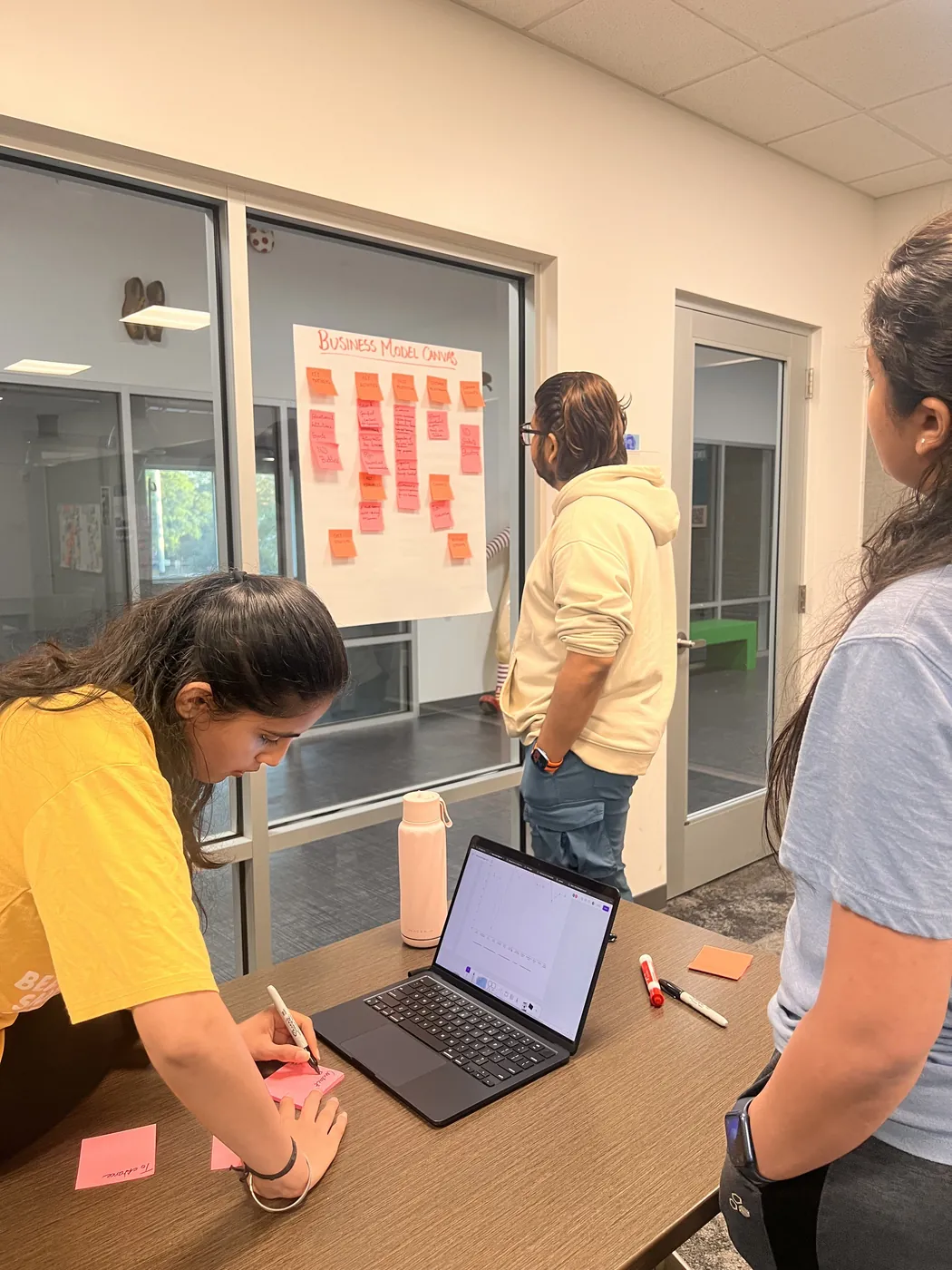
I mapped eighteen organisations by two things our research said mattered most: how adaptable they are to different minds, and how well they prepare students for work. Then we built a Business Model Canvas for the closest five to see exactly where each one fell short. The gaps repeated: programs that sit outside the curriculum, emotional needs treated as an afterthought, and support that ends when the program does.
The Competitive Landscape
Gap Not hands-on and not woven into academic timelines; emotional needs overlooked.
18 organisations mapped. Grey dots are the wider field.A Blue Ocean canvas compared us with the five closest competitors across eleven factors, and the ERIC framework turned the comparison into moves: keep career readiness and emotional safety strong, cut cost to the learner, raise academic alignment, personalisation, hands-on and multisensory learning, and create two factors nobody else offered. Toggle the competitors to compare.
Blue Ocean, Redrawn
Go Into the Classroom, Not Around It
- Decision
- Build Nudra as modular programs that plug into existing classes and campuses, instead of a separate, residential or after-hours program students have to leave their day for.
- Trade-off
- Dependence on institutional buy-in and academic calendars, which means slower, harder sales.
- Why
- Competitors pull students out of their normal routine, which costs more and quietly marks them as different. Modularity and in-class integration were the two factors no one offered.
Marty Neumeier's 17-step Zag sharpened it into one line we could test every idea against: Nudra is the only emotional learning companion for diverse learners, delivered through learning that is safe, supportive and personalised. Three north stars set the targets we would hold ourselves to.
The business model followed the people. Students can't pay and shouldn't have to, so institutions do: their DEI goals, Universal Design for Learning and ADA commitments make inclusive tools a budget line. Hiring companies pay a commission for work-ready talent, and grants, sponsors and alumni fund the rest.
The Business Model
- Educational institutions
- Neurodivergent students
- Educators
- Inclusive employers
Why it mattersStudents can't pay and shouldn't have to. Institutions buy, and students, educators and employers all benefit.
Sell to Institutions, Serve Students
- Decision
- A B2B2C model: institutions buy licences in three tiers, students use Nudra at no cost, and employers pay when they hire.
- Trade-off
- Longer sales cycles and the institutional hesitancy that comes with them.
- Why
- Institutions already have the budget and the compliance incentive. Charging students would have shut out the very people Nudra exists for.
One Ecosystem, Three Ways In
A strategy only matters if a student can feel it on a Tuesday morning. We turned ours into three products that work as one.
Five people over ten weeks needed structure without bureaucracy. We set roles by interest and strength, tracked work in a RACI and Gantt chart, and ran on three FigJam walls when one couldn't hold the research. We scored ourselves on Lencioni's Five Dysfunctions of a Team at the start and again midway: trust and commitment held, and accountability and healthy conflict rose once we got comfortable challenging each other.
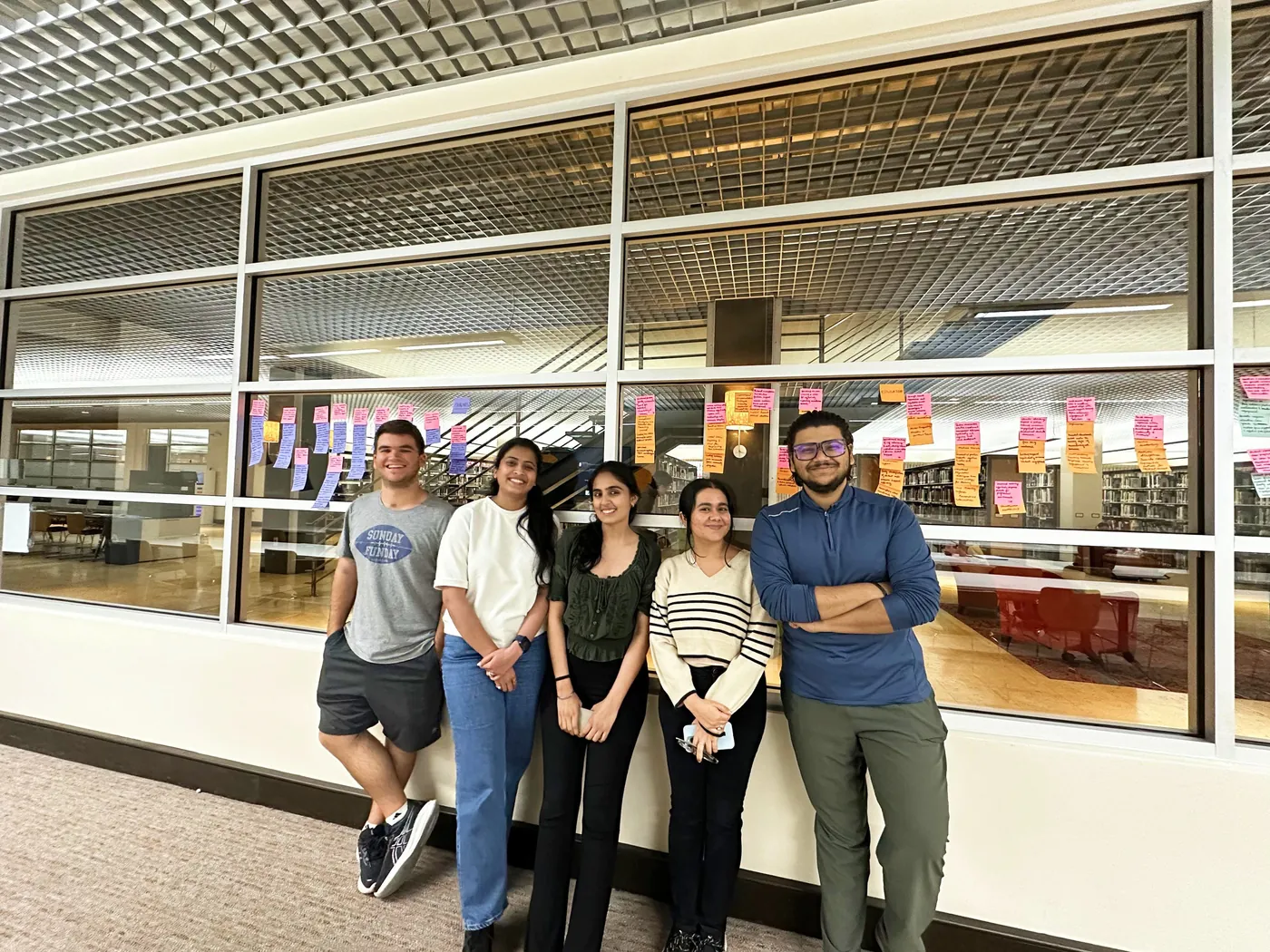
Market and opportunity analysis, competitive strategy, the business model, and AI-assisted synthesis. The one who asked the tough questions.
Ran the show: the RACI and Gantt, deadlines and nonstop momentum.
Made it pop: led the visual direction and designed the website.
Drew Bloop and the illustrations, and brought the motion.
The team's glue: first to jump in wherever the work needed her, and always checking on us.
Every product traces back to a question our research kept asking. Why aren't neurodivergent students career-ready? Why can't they focus in class? Why can't they learn the traditional way? Each answer became one part of the ecosystem. Select a gap to see what we built for it.
The Ecosystem
A six-week program that plugs into an existing class: reflection, career simulations, personal branding, teamwork, boundaries and transition, with opt-in, repeatable sessions.
Answers- Little soft-skill development
- Academic work that doesn't match the workplace
- Teaching methods not suited to ND minds
Phygital, Not Another App
- Decision
- Design three linked touchpoints: a six-week in-class program, a physical toolkit and a digital companion, instead of a single app.
- Trade-off
- Three things to design, produce and sell, and higher setup costs than software alone.
- Why
- Students told us they learn hands-on and through several senses at once, and that platforms already overwhelm them. A kit in your hands and a class in your week reach people an app can't.
Sprint carries the career readiness. Six weeks move from safety to strength, simulation, personal brand, teamwork, boundaries and transition, so emotionally harder work arrives once trust exists. Three of its activities went straight into testing.
Sprint, Week by Week
Icebreakers, shared norms and naming what you're already good at.
TestedWhat are you proud of?Regulation routines with the Tactyl kit, then low-stakes workplace scenarios.
TestedAsk for a deadline extensionJob paths, strengths and the start of a portfolio.
TestedThree skills for your portfolioGroup problem-solving and giving and receiving critique.
Self-advocacy scripts and meeting inclusive employers.
Celebrating growth and handing over to Horizon and a buddy.
The brand had to feel like a calm peer, not a clinic. Our tone principles were warm, grounded and non-clinical: we don't fix learners, we design with them. Ishita shaped the identity and the website; Diego drew the character that lives in the logo.
The Brand
Tested by Students, Funded by the Room
Eight students took the prototype apart. What they kept, rejected and renamed became the product we pitched.
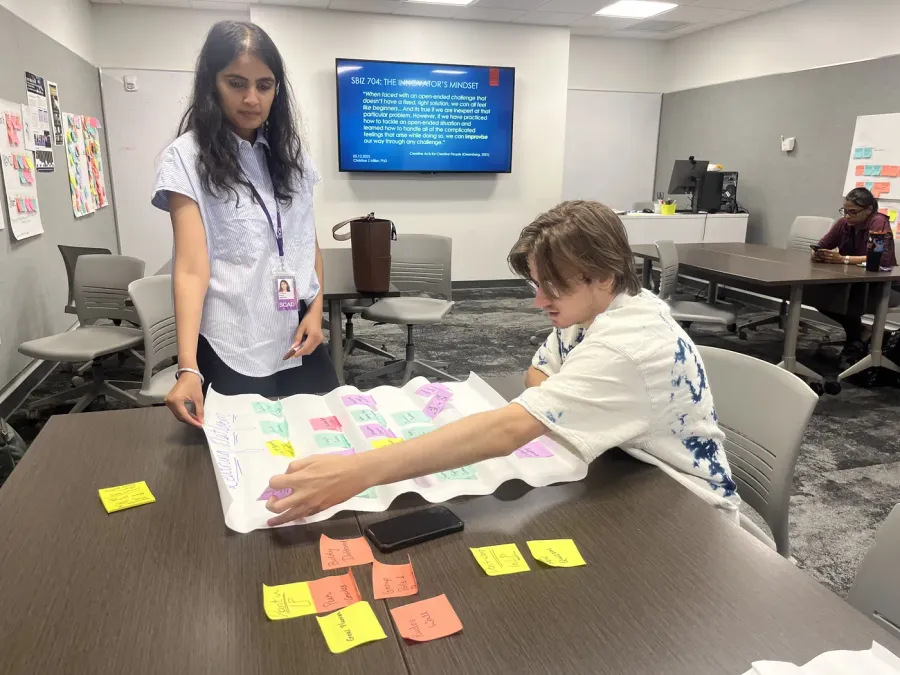
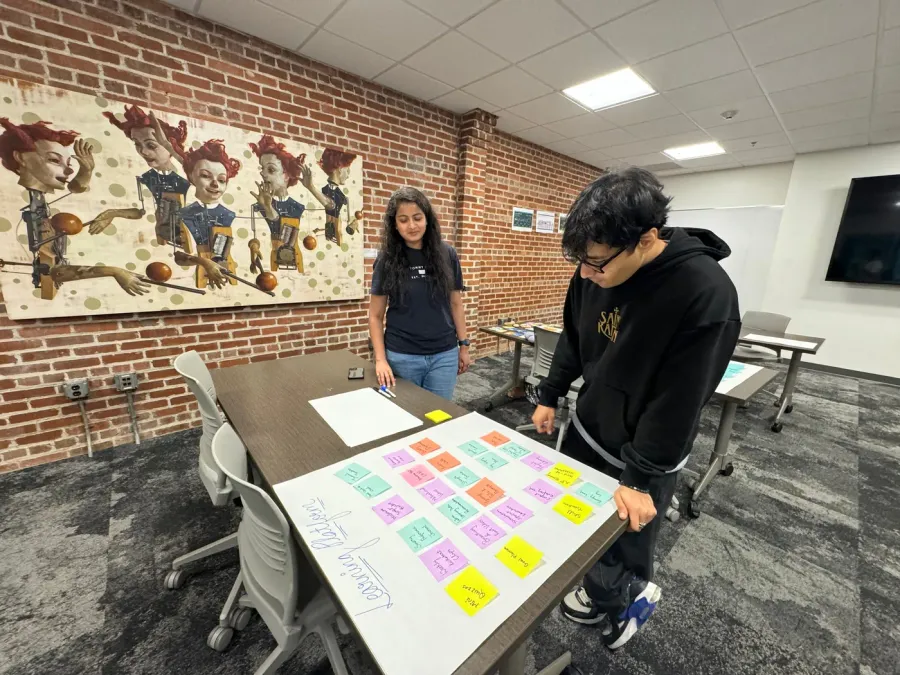
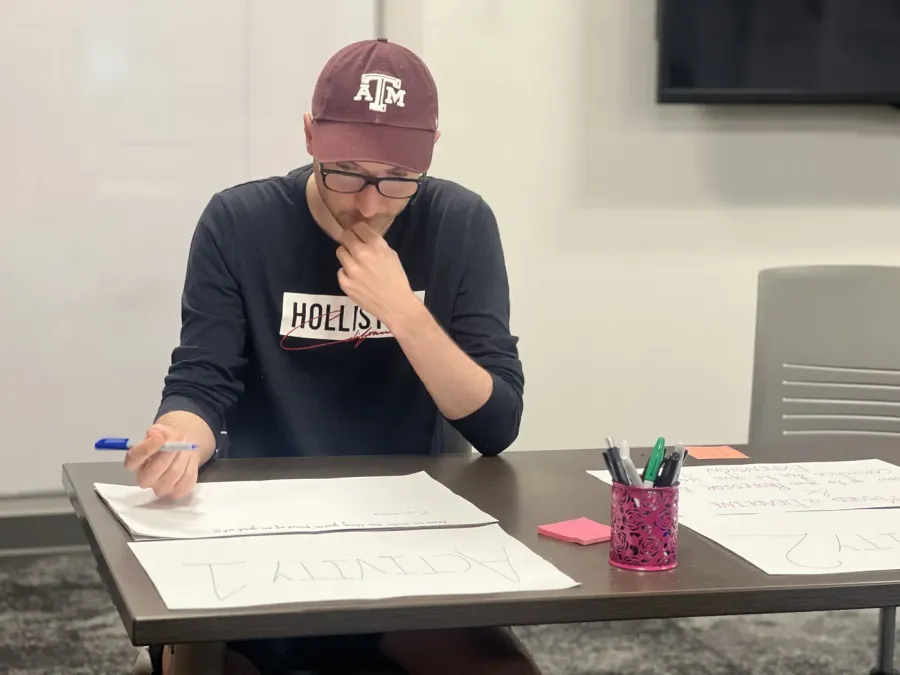
We tested all three products in one hands-on session with eight undergraduate and graduate students, several of them from our research phase. They lived through three Sprint activities, opened a real Tactyl kit and sorted Horizon's features into keep, ignore and improve, thinking aloud while we mapped reactions on sticky notes. One question cut deepest: if you could sell the kit back to us, would you?
What Testing Kept and Cut
Please avoid calling anything a quiz. That word stresses me out. Call it a checkpoint.
I didn't like the name Safety Plan Tool. It sounded built around fear. Call it a Resilience Builder.
I'd rather choose my own buddy than be assigned one.
These ideas aren't new, but you've packaged them well. Even if someone doesn't have ADHD, these could help.
Let Students Rename the Product
- Decision
- Rebuild features in students' words: quizzes became checkpoints, the Safety Plan became the Resilience Builder, buddies are chosen instead of assigned, and every kit item became opt-in.
- Trade-off
- Some features we loved were demoted, and a personalised kit is harder to standardise and price.
- Why
- Clinical words made support feel like a diagnosis, and imposed choices felt like rules. Language and choice decided whether students would actually use it.
The business model moved with the product: privacy-first, opt-in communication channels, support for self-identified learners alongside diagnosed ones, and campus accessibility offices and online neurodivergent communities as the routes students would actually find us.
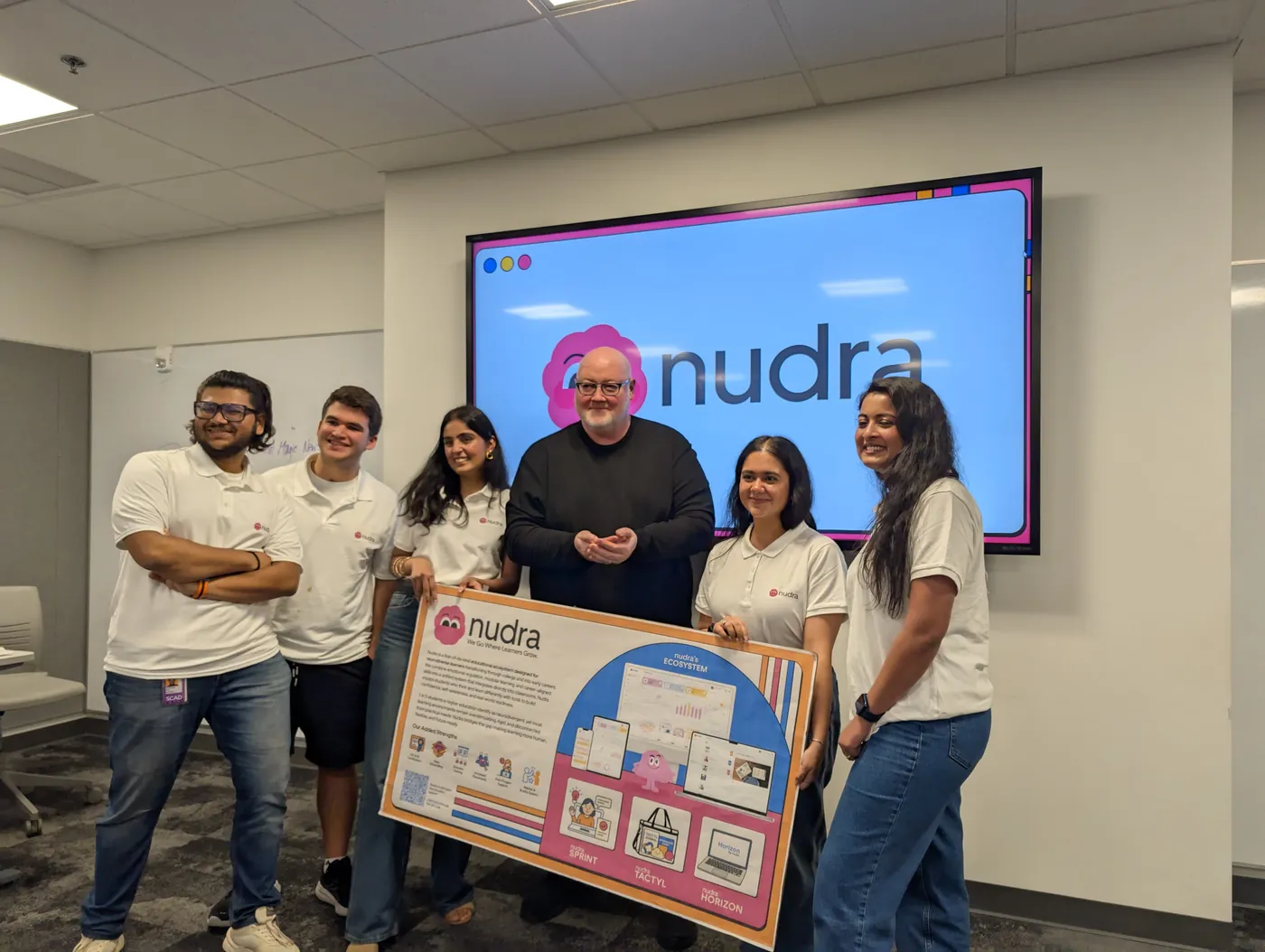
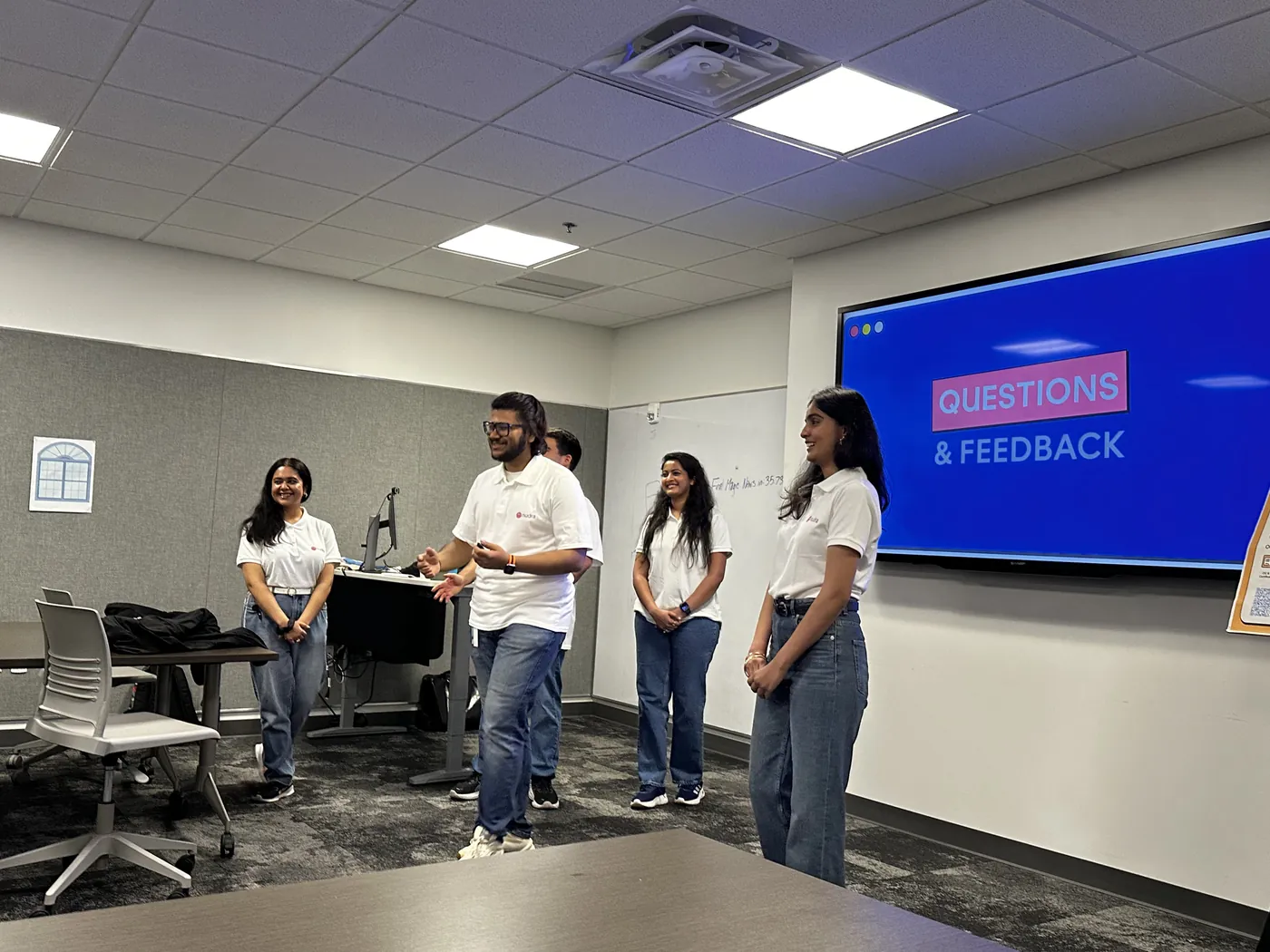
We closed with a Shark Tank style pitch, with the room playing investors, telling the problem from four seats: student, educator, institution and company. A vision video, shot over a full day at Adler Hall with SCAD students from other departments, followed one student from struggle to confidence through the Tactyl kit, Horizon and a buddy. The room raised no objections, only questions about implementation, and we left as the only team across four batches, a full year of these classes, to win the hypothetical funding.
Nudra, Built Out
The website as Ishita designed it, recreated with light polish, and Horizon redesigned from what testing told us. Example content is illustrative.
The Only Pitch That Got Funded
A ten-week venture concept that won over the pitch room, then an international jury.
Only
funded pitch across four batches, one full year
0
survey responses, plus 21 in-depth interviews
0
students who reshaped the product
IDA
Honorable Mention, 2025
Nudra didn't continue past the class, and it didn't need to for the lesson to land. It proved that a strategy built from evidence, a business model that lets institutions pay for students, and a product students had literally edited could win over the pitch room and the International Design Awards after it.
Prathamesh possesses a rare talent for objective, data-driven storytelling. I have seen him consistently operate not just as a graduate student but with the potential to become an elite design executive. He is a visionary leader who drives innovation through data, empathy, and strong business acumen. I give him my highest recommendation for any senior UX, Design Management, or AI Strategy role.
 John StoreyProfessor and Nudra's mentor, DMGT 720 at SCAD · Owner, Modementum Inc.
What I Learned
The Best Market Isn't Your Favourite
We pivoted away from the industry we loved most. The data was right, and the work was better for following it.
Strategy Has to Survive a Tuesday
A positioning line is only real once a student can hold it, attend it or open it. Every strategic choice needed a touchpoint.
Users Name Things Better
The words students chose, checkpoint and resilience, did more for adoption than any feature we added.