UP There
UP There
UP There
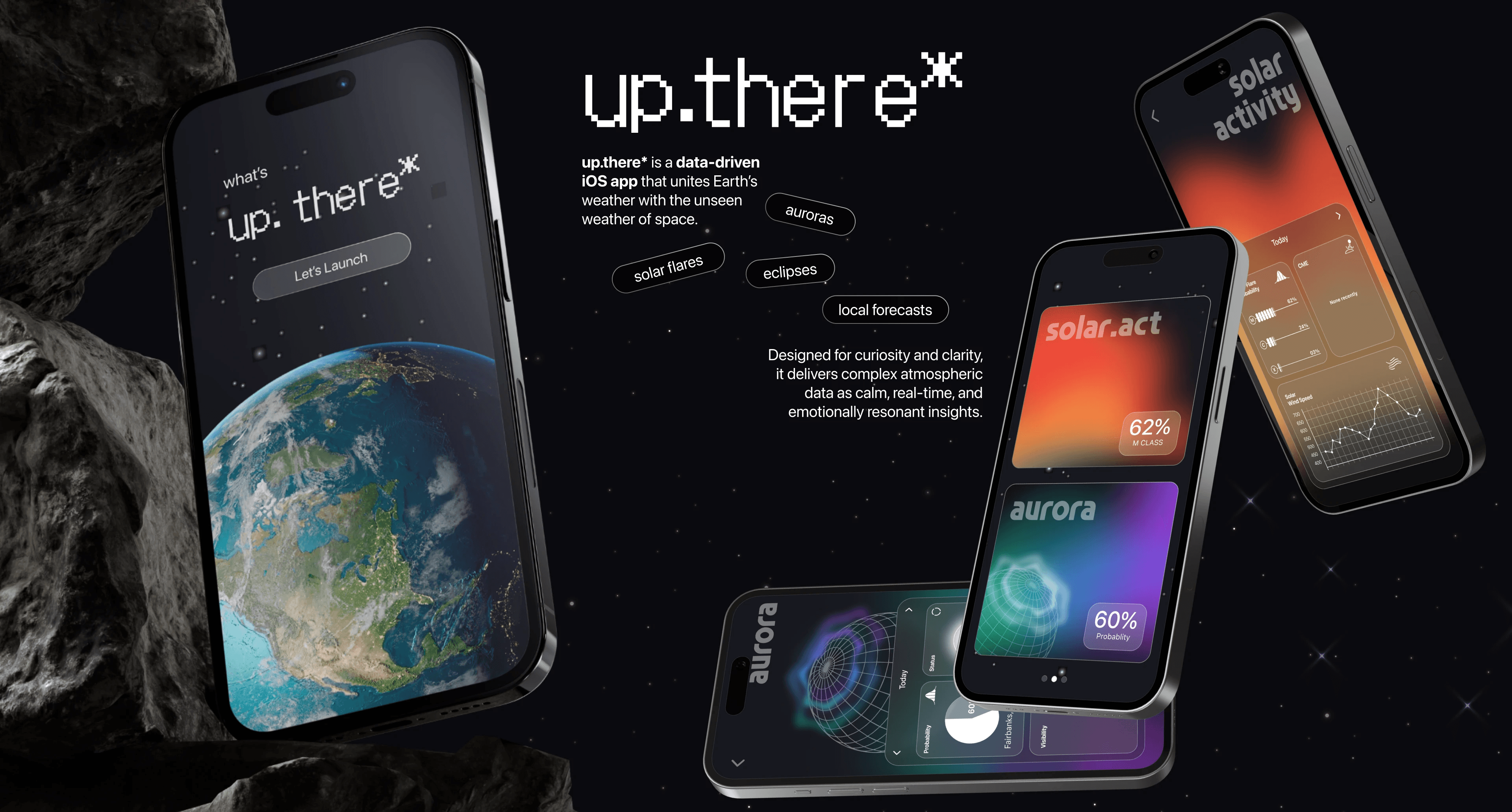
"Up There" began as a high-stakes challenge during SCAD’s Fluxathon: build a unique weather application in 24 hours. When traditional design-to-code methods failed critically just hours before the deadline, I pivoted the entire strategy to Vibe Coding. By orchestrating a team of specialized AI agents within Google’s AntiGravity ecosystem, I transformed a stalled prototype into a fully functional, live-deployed space weather platform. This project serves as a proof-of-concept for AI-Augmented Engineering, demonstrating how a single Design Manager can orchestrate a synthetic workforce to deliver full-stack application at speed.
"Up There" began as a high-stakes challenge during SCAD’s Fluxathon: build a unique weather application in 24 hours. When traditional design-to-code methods failed critically just hours before the deadline, I pivoted the entire strategy to Vibe Coding. By orchestrating a team of specialized AI agents within Google’s AntiGravity ecosystem, I transformed a stalled prototype into a fully functional, live-deployed space weather platform. This project serves as a proof-of-concept for AI-Augmented Engineering, demonstrating how a single Design Manager can orchestrate a synthetic workforce to deliver full-stack application at speed.
"Up There" began as a high-stakes challenge during SCAD’s Fluxathon: build a unique weather application in 24 hours. When traditional design-to-code methods failed critically just hours before the deadline, I pivoted the entire strategy to Vibe Coding. By orchestrating a team of specialized AI agents within Google’s AntiGravity ecosystem, I transformed a stalled prototype into a fully functional, live-deployed space weather platform. This project serves as a proof-of-concept for AI-Augmented Engineering, demonstrating how a single Design Manager can orchestrate a synthetic workforce to deliver full-stack application at speed.
Project Type
Project Type
Project Type
Designathon Project
Designathon Project
Designathon Project
Timeline
Timeline
Timeline
72 Hrs
72 Hrs
72 Hrs
Skills & Methods
Skills & Methods
Skills & Methods
Vibe-Coding
Vibe-Coding
Vibe-Coding
Agentic AI Workflow
Agentic AI Workflow
Agentic AI Workflow
Figma UI Design
Figma UI Design
Figma UI Design
Google- Anti Gravity
Google- Anti Gravity
Google- Anti Gravity
API Integration
API Integration
API Integration
Multi-Agent Systems
Multi-Agent Systems
Multi-Agent Systems
Prompt Engineering
Prompt Engineering
Prompt Engineering
Rapid Prototyping
Rapid Prototyping
Rapid Prototyping
Git Version Control
Git Version Control
Git Version Control
Change Management
Change Management
Change Management
AI Orchestration
AI Orchestration
AI Orchestration
Team Leadership
Team Leadership
Team Leadership
Adaptive Thinking
Adaptive Thinking
Adaptive Thinking
Clear Articulation
Clear Articulation
Clear Articulation
Claude Code
Claude Code
Claude Code
Team
Team
Team
Prathamesh P | Krishnika K | Pranay P
Prathamesh P | Krishnika K | Pranay P
Prathamesh P | Krishnika K | Pranay P
PROBLEM
PROBLEM
PROBLEM
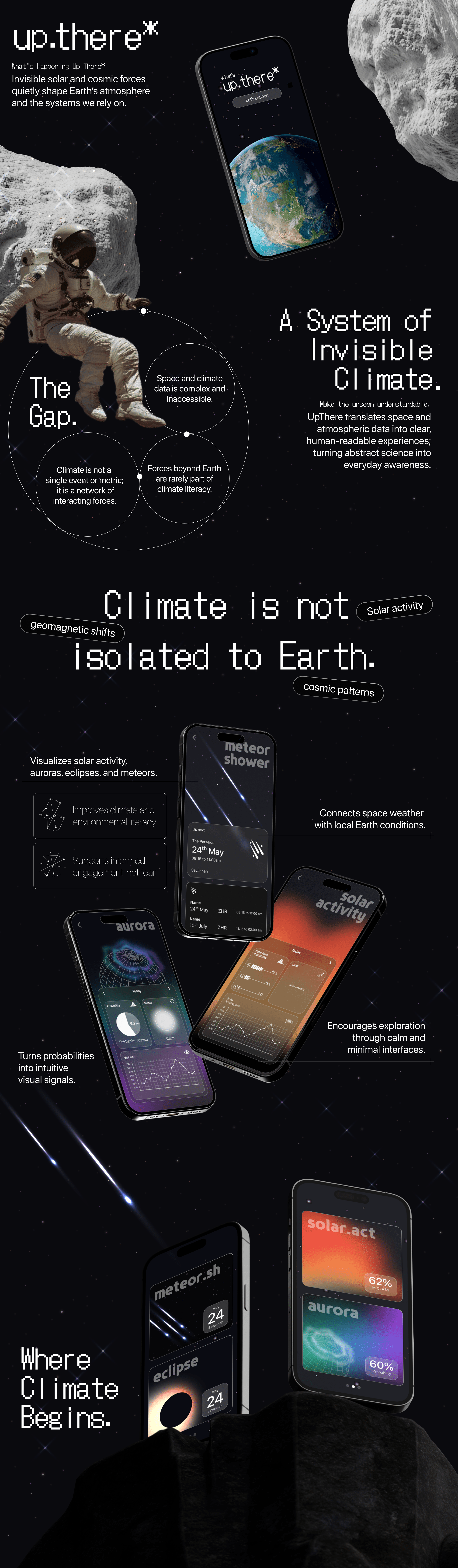
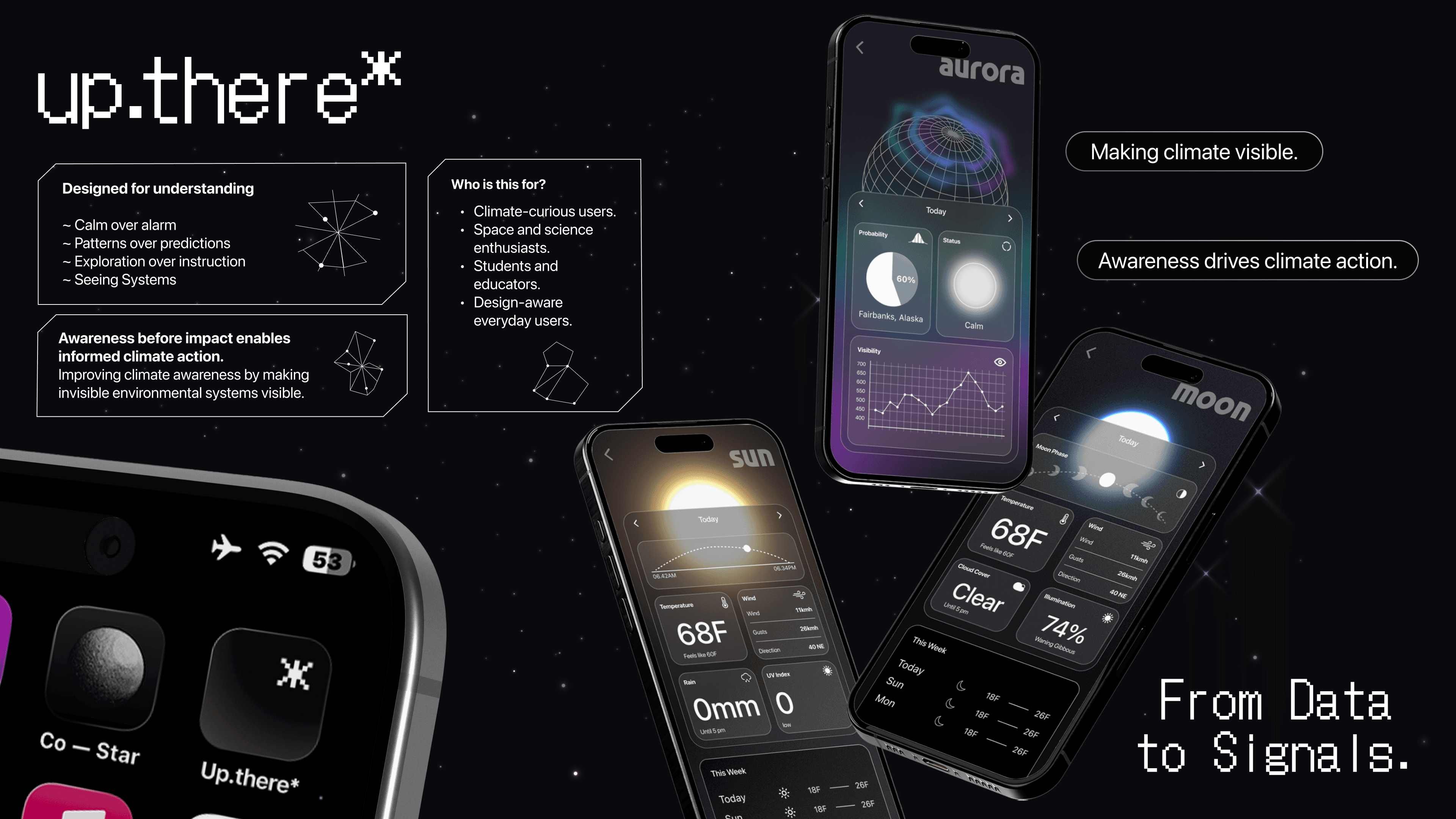
During "Fluxathon," my team aimed to build "Up There," a comprehensive weather app combining Earth data with Space weather (auroras, meteor showers, eclipses) using NASA APIs.
The Block: Our initial "Design-First" approach failed catastrophically at 4:00 AM on submission day. We had high-fidelity screens, but Claude Code could not stitch the complex UI with the functional logic via command line, leaving us with a broken product and almost zero time.
During "Fluxathon," my team aimed to build "Up There," a comprehensive weather app combining Earth data with Space weather (auroras, meteor showers, eclipses) using NASA APIs.
The Block: Our initial "Design-First" approach failed catastrophically at 4:00 AM on submission day. We had high-fidelity screens, but Claude Code could not stitch the complex UI with the functional logic via command line, leaving us with a broken product and almost zero time.
During "Fluxathon," my team aimed to build "Up There," a comprehensive weather app combining Earth data with Space weather (auroras, meteor showers, eclipses) using NASA APIs.
The Block: Our initial "Design-First" approach failed catastrophically at 4:00 AM on submission day. We had high-fidelity screens, but Claude Code could not stitch the complex UI with the functional logic via command line, leaving us with a broken product and almost zero time.
SOLUTION
SOLUTION
SOLUTION
I adopted the "Vibe Coding" methodology, leveraging Google AntiGravity to orchestrate a synthetic team of specialized AI Agents. Instead of giving up on this project, I acted as the "Chief of Staff," defining the System Requirement Document (SRD) and managing four distinct agents:
Project Manager Agent: Maintained the "Source of Truth," managed change logs, and ensured alignment with the SRD.
Solution Architect Agent: Planned the tech stack, handled debugging strategies, and ensured scalable architecture.
Front-End Artisan Agent: Equipped with a custom
skills.mdfile, this agent translated wireframes into responsive UI/UX which matched our initial designs from Figma.Back-End Engineer Agent: Managed complex API handshakes with NASA and Earth weather API services.
I adopted the "Vibe Coding" methodology, leveraging Google AntiGravity to orchestrate a synthetic team of specialized AI Agents. Instead of giving up on this project, I acted as the "Chief of Staff," defining the System Requirement Document (SRD) and managing four distinct agents:
Project Manager Agent: Maintained the "Source of Truth," managed change logs, and ensured alignment with the SRD.
Solution Architect Agent: Planned the tech stack, handled debugging strategies, and ensured scalable architecture.
Front-End Artisan Agent: Equipped with a custom
skills.mdfile, this agent translated wireframes into responsive UI/UX which matched our initial designs from Figma.Back-End Engineer Agent: Managed complex API handshakes with NASA and Earth weather API services.
I adopted the "Vibe Coding" methodology, leveraging Google AntiGravity to orchestrate a synthetic team of specialized AI Agents. Instead of giving up on this project, I acted as the "Chief of Staff," defining the System Requirement Document (SRD) and managing four distinct agents:
Project Manager Agent: Maintained the "Source of Truth," managed change logs, and ensured alignment with the SRD.
Solution Architect Agent: Planned the tech stack, handled debugging strategies, and ensured scalable architecture.
Front-End Artisan Agent: Equipped with a custom
skills.mdfile, this agent translated wireframes into responsive UI/UX which matched our initial designs from Figma.Back-End Engineer Agent: Managed complex API handshakes with NASA and Earth weather API services.
VALUE DELIVERED
VALUE DELIVERED
VALUE DELIVERED
0-to-1 Deployment in <12 Hours: Successfully built, debugged, and deployed the fully functional app to Vercel before the deadline.
Proof of Agentic Workflow: Demonstrated that a single "AI Orchestrator" can manage a full-stack software lifecycle by defining clear roles and context (SRD) rather than writing syntax.
Scalable Architecture: The modular agent structure allowed for rapid iteration, proving the viability of "Vibe Coding" for complex, API-heavy applications.
0-to-1 Deployment in <12 Hours: Successfully built, debugged, and deployed the fully functional app to Vercel before the deadline.
Proof of Agentic Workflow: Demonstrated that a single "AI Orchestrator" can manage a full-stack software lifecycle by defining clear roles and context (SRD) rather than writing syntax.
Scalable Architecture: The modular agent structure allowed for rapid iteration, proving the viability of "Vibe Coding" for complex, API-heavy applications.
0-to-1 Deployment in <12 Hours: Successfully built, debugged, and deployed the fully functional app to Vercel before the deadline.
Proof of Agentic Workflow: Demonstrated that a single "AI Orchestrator" can manage a full-stack software lifecycle by defining clear roles and context (SRD) rather than writing syntax.
Scalable Architecture: The modular agent structure allowed for rapid iteration, proving the viability of "Vibe Coding" for complex, API-heavy applications.
APPROACH
APPROACH
APPROACH
Define (The SRD): Wrote a comprehensive System Requirement Document outlining every feature, asset, and data flow to ground the AI models.
Assign (The Roles): Instantiated specific agents in AntiGravity, assigning them distinct "Personas" and responsibilities to prevent context drift.
Equip (The Skills): Created and injected
skills.mdfiles to give the Front-End agent specific design constraints and best practices.Execute (The Build): Iteratively prompted the agents, having the "Architect" review the "Engineer's" code before committing to GitHub.
Deploy: Automated the hosting pipeline via Vercel for immediate live access.
Define (The SRD): Wrote a comprehensive System Requirement Document outlining every feature, asset, and data flow to ground the AI models.
Assign (The Roles): Instantiated specific agents in AntiGravity, assigning them distinct "Personas" and responsibilities to prevent context drift.
Equip (The Skills): Created and injected
skills.mdfiles to give the Front-End agent specific design constraints and best practices.Execute (The Build): Iteratively prompted the agents, having the "Architect" review the "Engineer's" code before committing to GitHub.
Deploy: Automated the hosting pipeline via Vercel for immediate live access.
Define (The SRD): Wrote a comprehensive System Requirement Document outlining every feature, asset, and data flow to ground the AI models.
Assign (The Roles): Instantiated specific agents in AntiGravity, assigning them distinct "Personas" and responsibilities to prevent context drift.
Equip (The Skills): Created and injected
skills.mdfiles to give the Front-End agent specific design constraints and best practices.Execute (The Build): Iteratively prompted the agents, having the "Architect" review the "Engineer's" code before committing to GitHub.
Deploy: Automated the hosting pipeline via Vercel for immediate live access.
SUMMARY
SUMMARY
SUMMARY
"Up There" was a masterclass in Vibe Coding. It shifted my role from a designer/developer to an Orchestrator of Intelligence. By treating AI not as a tool but as a staff, I turned a failed project into a deployed product in hours, showcasing the future of rapid prototyping and application development.
"Up There" was a masterclass in Vibe Coding. It shifted my role from a designer/developer to an Orchestrator of Intelligence. By treating AI not as a tool but as a staff, I turned a failed project into a deployed product in hours, showcasing the future of rapid prototyping and application development.
"Up There" was a masterclass in Vibe Coding. It shifted my role from a designer/developer to an Orchestrator of Intelligence. By treating AI not as a tool but as a staff, I turned a failed project into a deployed product in hours, showcasing the future of rapid prototyping and application development.